Origin of Indian Musical Instruments – Echoes of India’s Timeless Heritage
Indian musical instruments hold a special place in the cultural and spiritual history of the country. Each instrument carries centuries of tradition, craftsmanship, and artistic evolution. From temple rituals to royal courts, from folk gatherings to Sufi shrines, these instruments have shaped the soundscape of India’s classical, folk, and devotional music.
At Roohani Utsav, we honour these instruments not merely as tools of music, but as vessels of heritage—each with its own story, soul, and significance.
Below is a detailed exploration of five iconic instruments: Tabla, Bansuri, Shehnai, Tanpura, and Sitar, each representing a unique facet of India’s musical journey.
Tabla – The Rhythmic Heartbeat of India
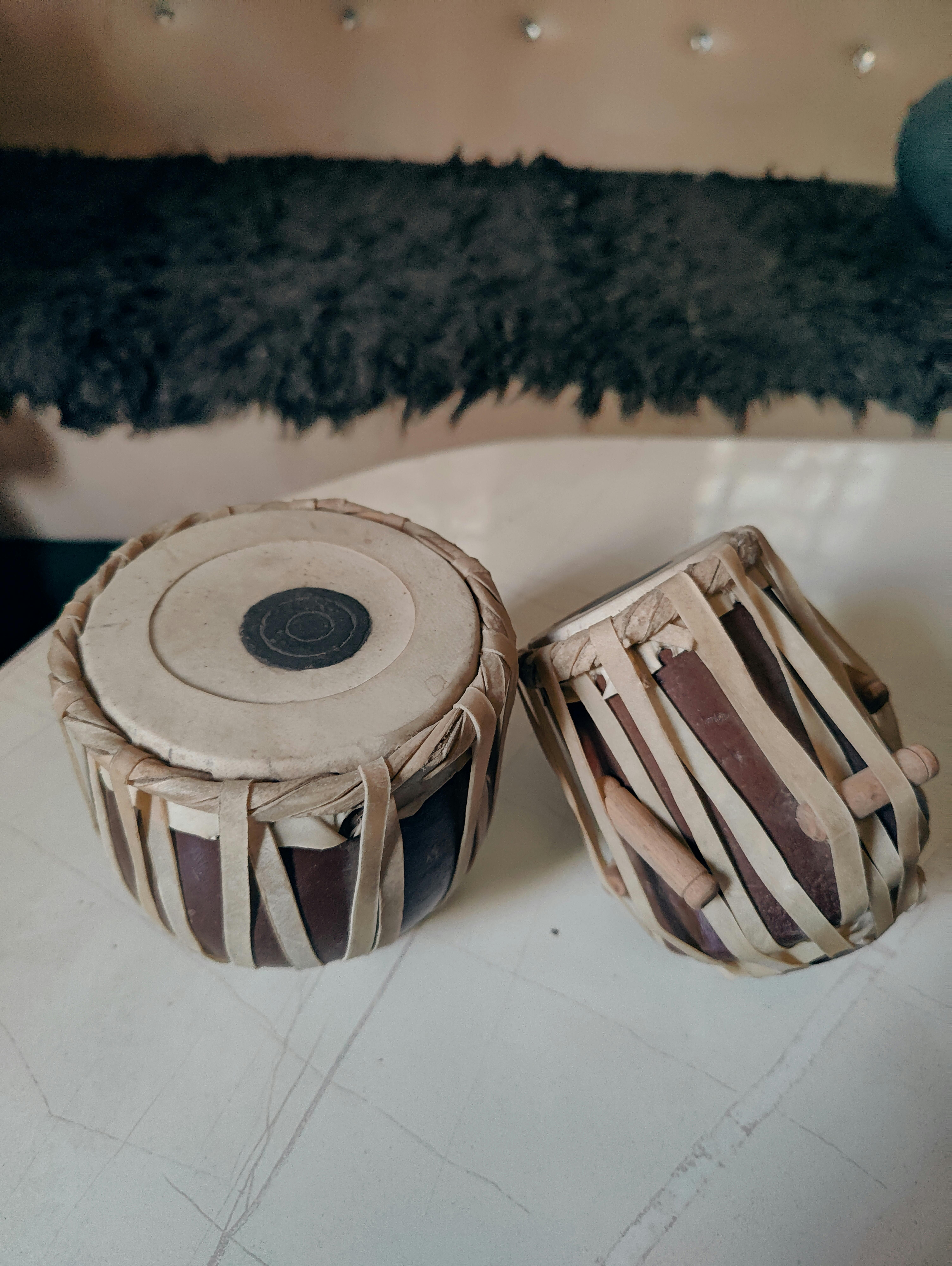
The Tabla is one of the most celebrated percussion instruments in Indian music. Its origins can be traced back to the 18th century, evolving from earlier drums such as the pakhawaj.
Origins
Legend credits Amir Khusro with inventing the Tabla, though historians suggest it developed during the Mughal era when musicians experimented with splitting the pakhawaj into two separate drums for greater flexibility. Over time, it became central to Hindustani classical music.
Characteristics
- Consists of two drums: Dayan (right drum) and Bayan (left drum)
- Highly expressive, capable of delicate rhythms and powerful beats
- Played with a complex vocabulary of syllables known as bols
Essence
The Tabla brings life to Indian music with its crisp tones, intricate patterns, and expressive energy. It is used in classical, folk, devotional, and modern fusion styles.
Bansuri – The Divine Flute of India
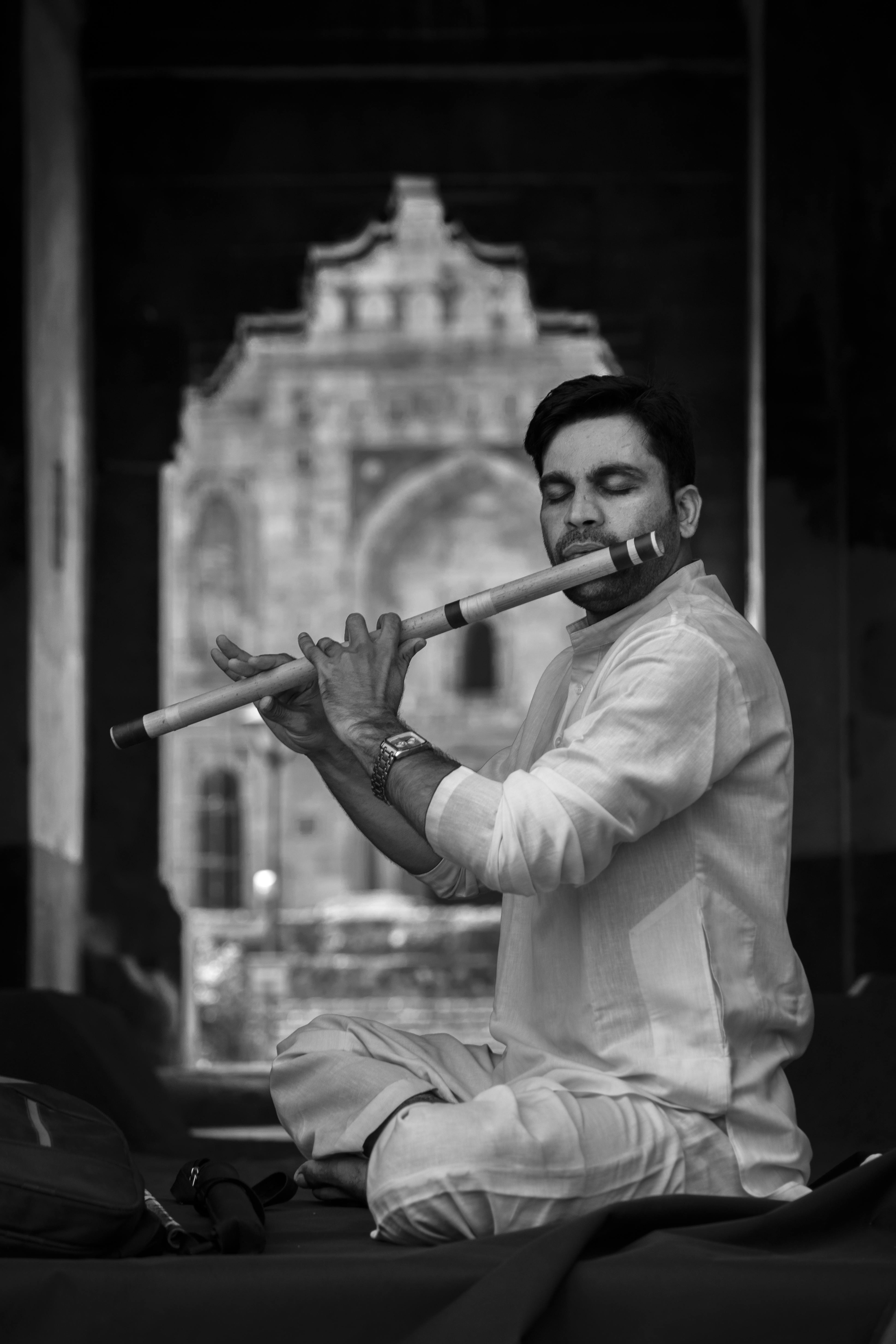
The Bansuri (bamboo flute) is one of the oldest musical instruments in Indian civilisation, dating back over 3,000 years. It holds deep spiritual significance due to its association with Lord Krishna.
Origins
Excavations from the Indus Valley Civilisation reveal ancient flutes made of reeds and bones. The Bansuri evolved in rural India, crafted from bamboo and played by shepherds, mystics, and folk musicians.
Characteristics
- Made from a single piece of bamboo
- Produces soft, soothing, and deeply emotional melodies
- Comes in two types: horizontal (transverse) and vertical
Essence
The Bansuri’s simplicity and purity of sound make it a symbol of divine love, serenity, and spiritual longing. It is widely used in Hindustani classical music and folk traditions.
Shehnai – The Auspicious Sound of Celebration
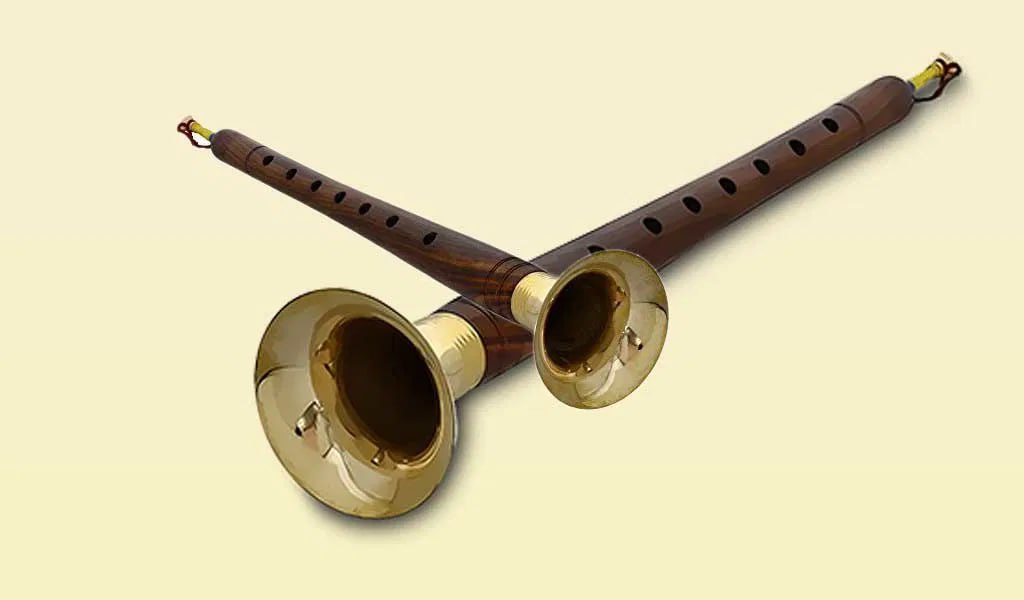
The Shehnai is a traditional wind instrument often associated with weddings, festivals, and temple ceremonies. It carries a rich, auspicious sound believed to bring good fortune.
Origins
The Shehnai evolved from the ancient Persian instrument Nafeeri. In India, it gained prominence in royal courts and temple rituals. Its modern identity was shaped largely by Ustad Bismillah Khan, whose soulful performances brought it global recognition.
Characteristics
- Made of wood with a flared metal bell at the end
- Played using a double reed
- Produces a bright, expressive, and melodious tone
Essence
The Shehnai represents celebration, purity, and cultural tradition. Its music fills spaces with nostalgia, joy, and emotional depth, making it an essential part of Indian ceremonies.
Tanpura – The Eternal Drone of Indian Music
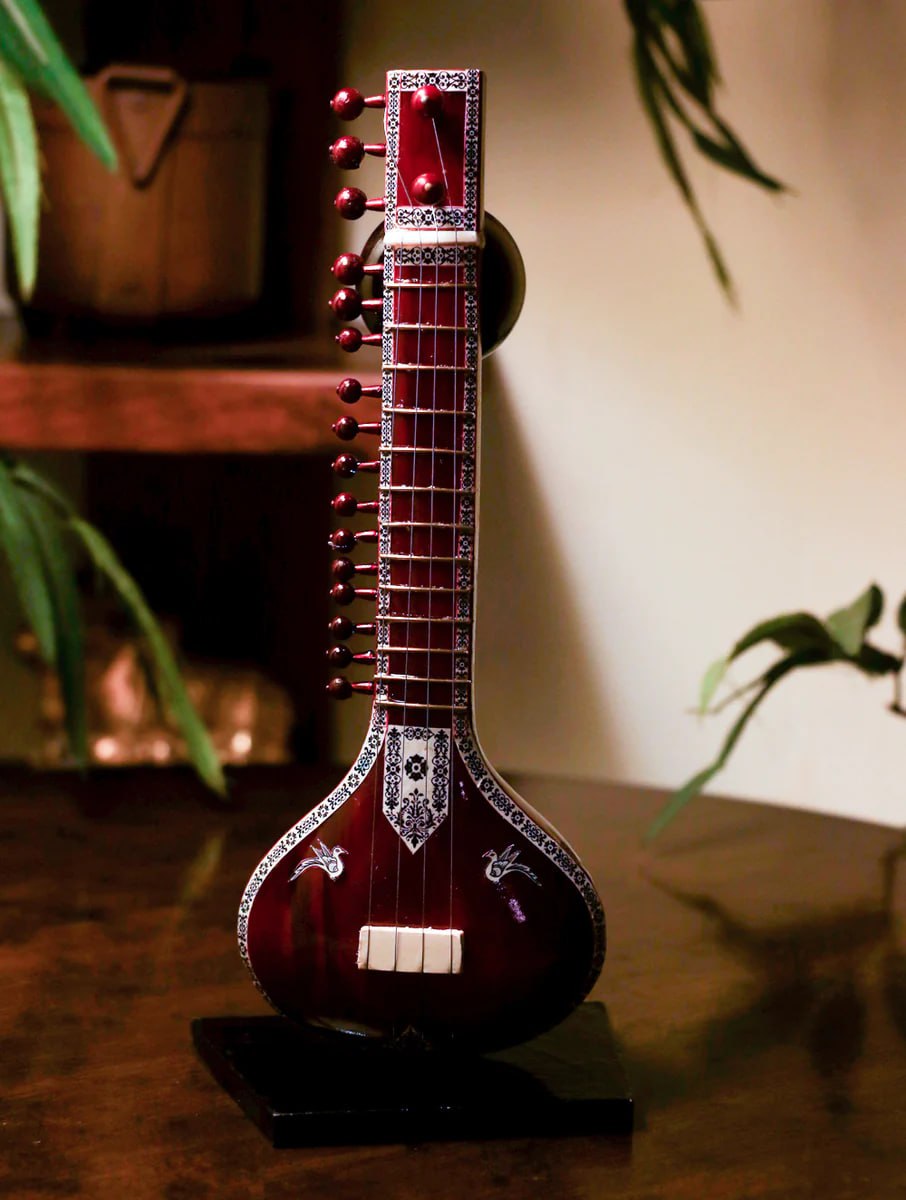
The Tanpura is not a melody instrument but a supportive drone, essential for classical performances. It creates the sonic foundation for singers and instrumentalists.
Origins
References to the Tanpura can be found in ancient texts like the Natya Shastra. It likely evolved from the vina family of instruments. Over centuries, its simple yet powerful design became central to all forms of Indian classical music.
Characteristics
- Four to six long strings producing a continuous, resonant drone
- Played using light plucking to maintain a steady harmonic base
- Enhances the emotional depth of ragas
Essence
The Tanpura symbolises continuity, purity, and spiritual grounding. Its meditative drone allows singers to explore ragas with precision and emotional clarity.
Sitar – The Iconic String Instrument of India
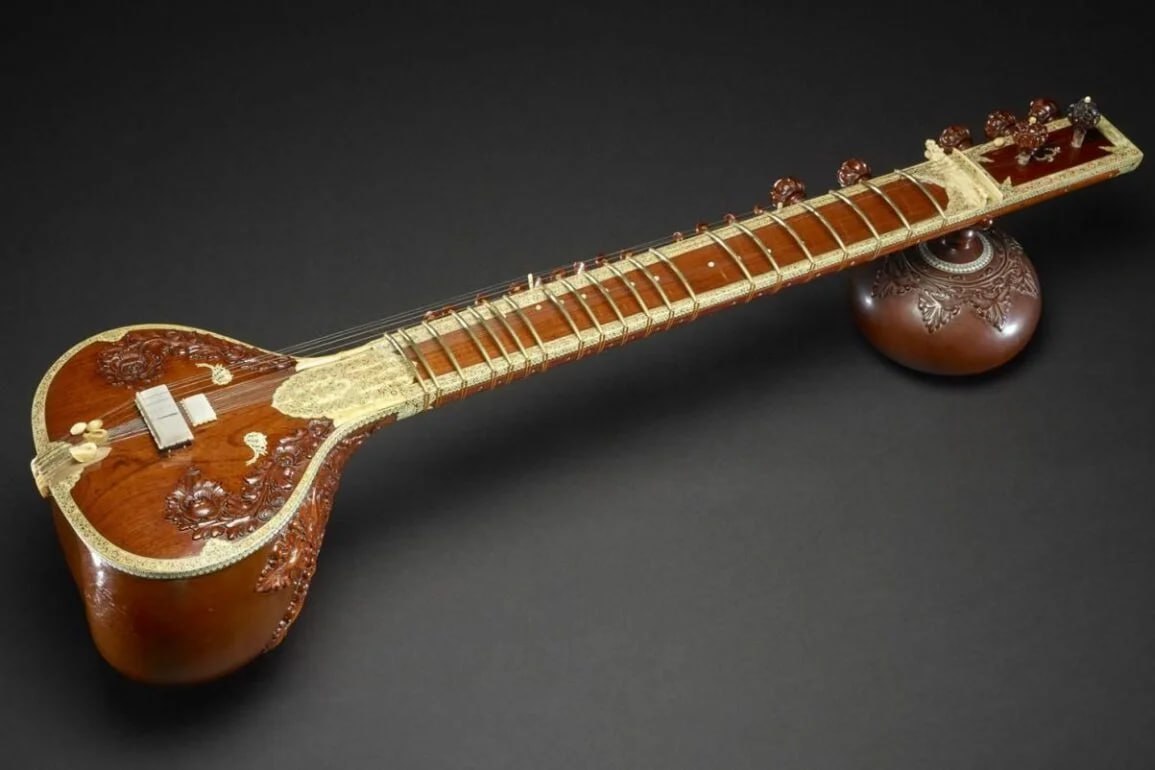
The Sitar is one of the world’s most recognised Indian instruments. Rich in history and sonic beauty, it combines Indian aesthetics with influences from Persian string instruments.
Origins
The Sitar evolved around the 13th century, influenced by instruments like the veena and the Persian setar. It flourished during the Mughal period and was later refined by legendary musicians like Ravi Shankar and Vilayat Khan.
Characteristics
- Long hollow neck with movable frets
- 18–21 strings including sympathetic strings (tarab)
- Produces a bright, resonant, and highly expressive sound
Essence
The Sitar is known for its spiritual tones, emotional fluidity, and captivating melodies. It remains central to Hindustani classical music and has influenced global genres including fusion, rock, and world music.
Roohani Utsav’s Commitment to Musical Heritage
At Roohani Utsav, we honour India’s musical instruments through:
- Live performances
- Interactive workshops
- Storytelling sessions
- Cultural exhibitions
- Collaborations with artisans and maestros
Our goal is to preserve these timeless instruments, support artists who dedicate their lives to mastering them, and bring audiences closer to India’s musical soul.
From the rhythmic mastery of the Tabla to the divine simplicity of the Bansuri, from the ceremonial beauty of the Shehnai to the meditative hum of the Tanpura, and the enchanting elegance of the Sitar, Roohani Utsav celebrates the instruments that shaped India’s musical identity.